
1857 to 1926
Émile Coué was a French pharmacist who believed that the most powerful influence on how we feel is the quiet, repeated voice of our own imagination. His method asks for almost nothing: one sentence, said twenty times, morning and night.
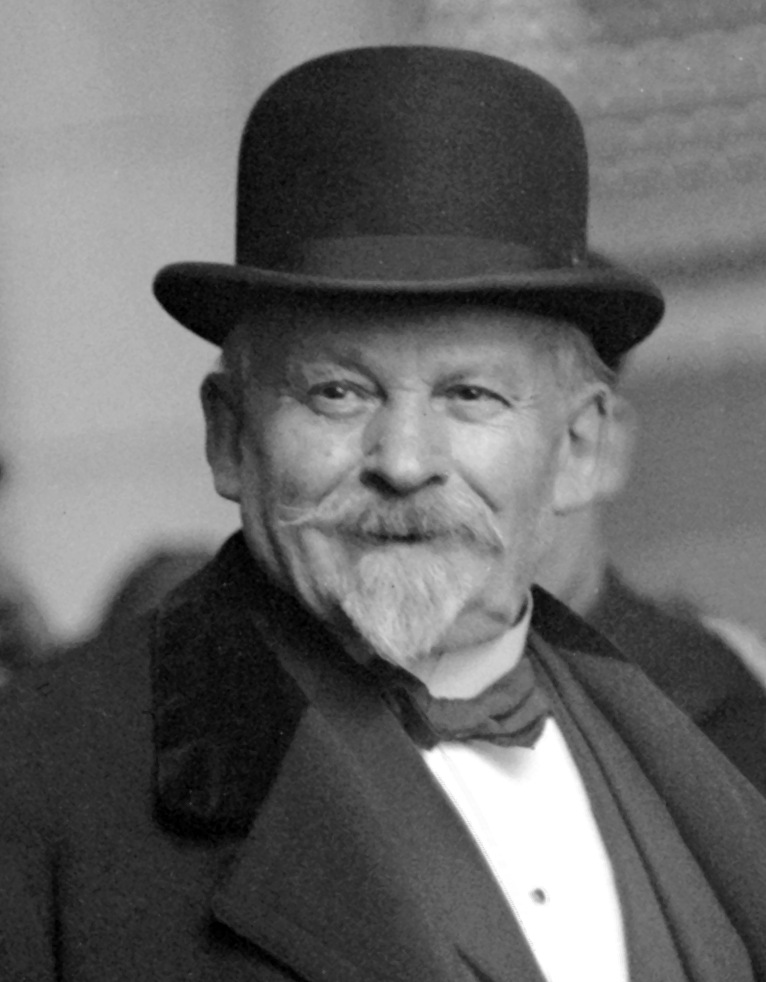
A pharmacist in Troyes
Coué was born in Troyes, in north-eastern France, on 26 February 1857. He hoped to become a chemist, but his family had little money, so he qualified in pharmacy instead and ran a pharmacy in Troyes from 1882 until 1910.
Behind the counter he noticed something curious. When he spoke warmly and confidently about a remedy, and tucked a short encouraging note in with it, his customers often seemed to do better than when he said nothing. The words appeared to matter as much as the medicine.
From hypnosis to autosuggestion
In 1886 and 1887 Coué studied in Nancy with Ambroise-Auguste Liébeault and Hippolyte Bernheim, two of the leading figures in hypnotism at the time. He used hypnosis for some years, but found that its effects often faded once a person woke. What lasted, he came to think, was the suggestion a person gave to themselves.
In 1910 he sold his pharmacy and moved to Nancy, where he opened a clinic. For around sixteen years he saw people in groups, without charge, teaching them what he called conscious autosuggestion. In 1913 he and his wife, Lucie, founded the Lorraine Society of Applied Psychology to spread the work.
Imagination, not willpower
At the heart of Coué’s teaching is a simple observation: when your will and your imagination disagree, imagination usually wins. Lie awake telling yourself you must sleep, and sleep moves further away. Grit your teeth and insist you will not reach for a cigarette, and the cigarette fills your mind.
So Coué did not ask people to try harder. He asked them to stop fighting and instead to feed the imagination a calm, general suggestion of improvement, often enough that it became part of the background of their thinking.
Every day, in every way, I am getting better and better.
Émile Coué’s formula
In French: Tous les jours, à tous points de vue, je vais de mieux en mieux. The first English edition of his book, in 1922, translated it as “every day, in every respect”; “in every way” is the version that caught on. Coué deliberately kept it general. It names no illness and no goal, so it can apply to whatever needs it.
The twenty knots
To avoid the distraction of counting, Coué suggested a piece of string with twenty knots tied in it. On waking, and again as you fall asleep, you pass the knots through your fingers one at a time, saying the formula once for each. The voice should be simple and unforced, loud enough to hear yourself, almost like a litany. That string is where this app takes its name.
“I have never cured anyone”
Coué became famous across Europe and in America, and was often described as a healer. He rejected the title. He said he had never cured anyone in his life; he only showed people how to make use of a capacity they already had. That humility is part of why his method has lasted.
His book
Coué set out his ideas in Self-Mastery Through Conscious Autosuggestion, published in England in 1920 and in the United States in 1922. It is short, practical and still in print. His ideas went on to influence later writers on positive thinking, including Napoleon Hill and Norman Vincent Peale.
A fair word
Coué’s own success figures were never independently tested, and doctors of his day criticised some of the claims made in his name. We share his method because it is gentle, free and easy to practise, not as a substitute for medical care. If you are unwell, please speak to your GP or a qualified professional.
Coué died in Nancy on 2 July 1926.